

Precise Risk Assessment for Power Line Safety
The Traditional Approach
Historically, utilities relied on helicopter patrols and ground inspections to identify vegetation risks. Crews would fly or walk the lines, visually assessing which trees needed trimming.
This approach is slow, expensive, and inherently subjective. Different inspectors flag different trees. Exact clearance distances are impossible to judge visually. And scheduling crews based on inconsistent data leads to either over-trimming (wasting money) or under-trimming (accepting risk).
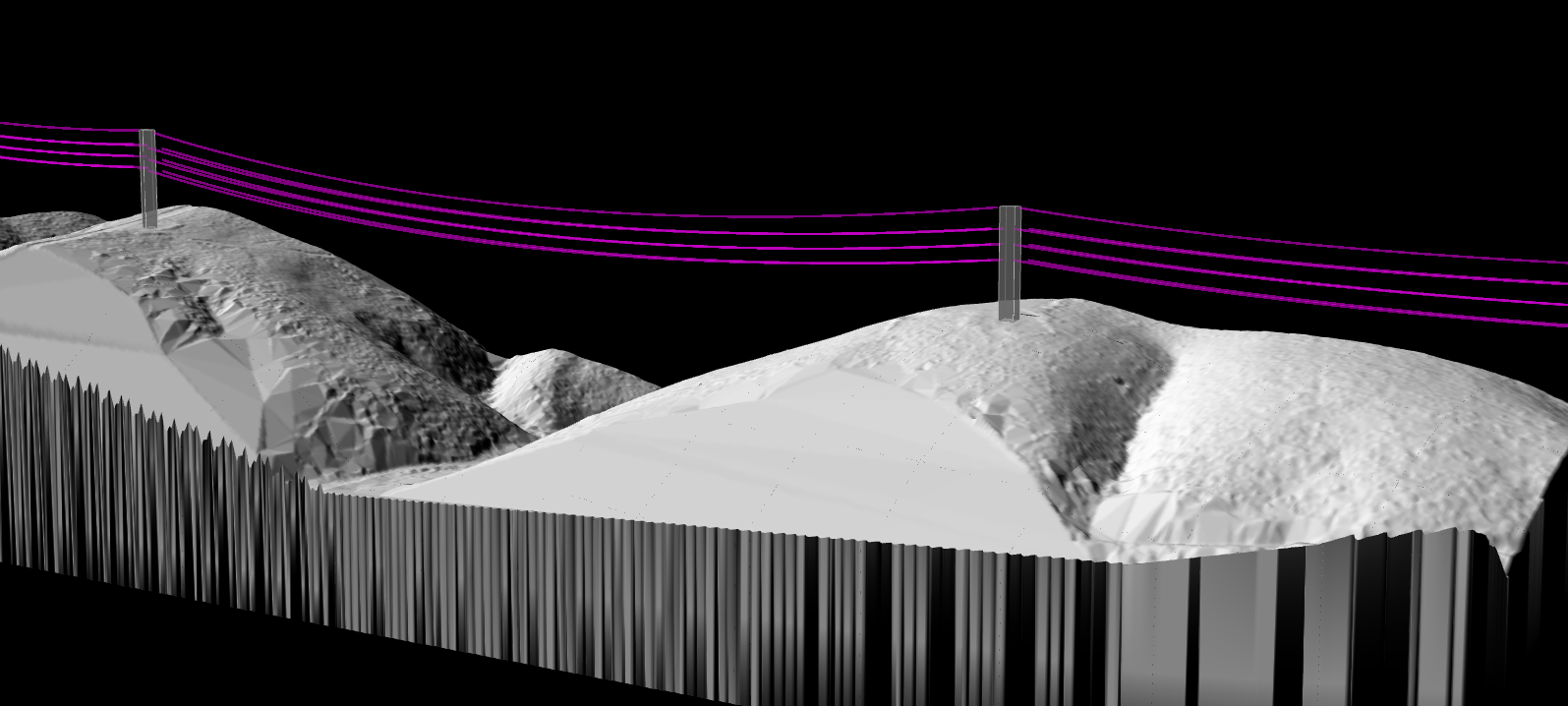
LiDAR-derived power line extraction showing vegetation clearances.
The LiDAR Advantage
LiDAR surveys capture the precise 3D position of every wire, pole, crossarm, and nearby tree. Software automatically measures exact distances in centimeters.
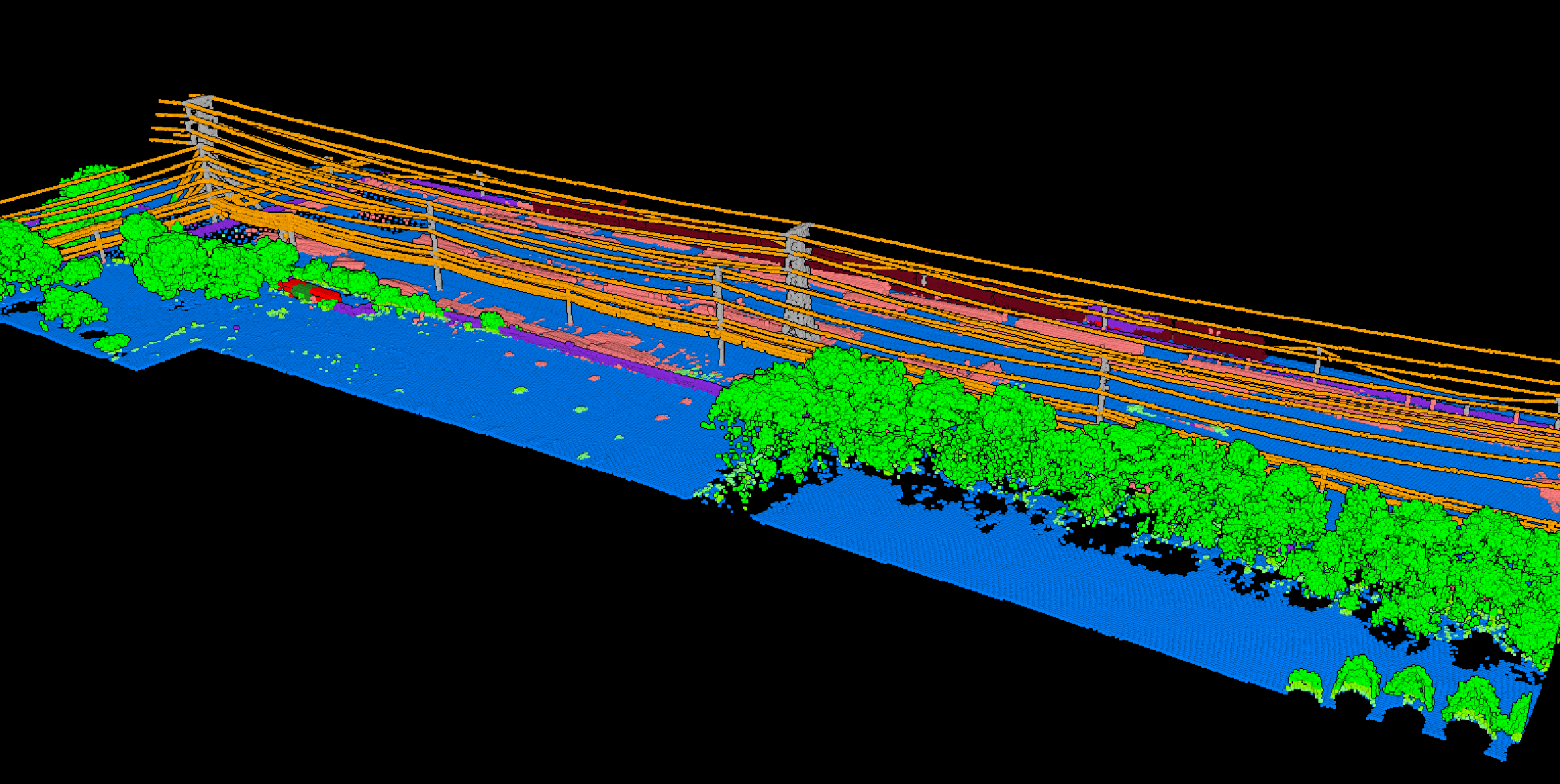
Classified point cloud showing vegetation near utility infrastructure.
Beyond Vegetation
The same LiDAR data supports other inspection tasks. Analysts can measure conductor sag to verify thermal ratings. They can check pole lean and crossarm level. They can identify equipment attached to poles and verify ground clearances.
A single aerial survey supports multiple inspection workflows, multiplying the return on investment.
Vegetation Analysis with LidarVisor
LidarVisor automatically detects power line infrastructure, classifies vegetation, and calculates wire-to-tree clearances. Generate risk reports that prioritize work by encroachment severity, fall-in potential, and growth rate, focusing your vegetation management budget where it matters most.
Related Industry Applications
Infrastructure
• Bridge & Road Inspection
• Powerline Extraction
• Construction
Natural Resources
• Forest Inventory
• Forest Guide
• Vegetation Management
Geospatial
• Surveying
• Terrain Mapping
• Archaeology
Ready to Improve Vegetation Management?
Upload your utility corridor LiDAR data and get automated vegetation risk analysis. Start with 10 hectares of free processing.