
Industries
LiDAR for Forest Inventory
Measure canopy height, detect individual trees, and generate forest inventory deliverables from LiDAR point clouds
No credit card required • 50 hectares included
Forest inventory work depends on understanding both terrain and canopy structure. LiDAR makes that possible by capturing 3D forest data, from ground elevation below vegetation to treetop height above it.
This guide explains what LiDAR contributes to forest inventory, which outputs are most useful, and how Lidarvisor helps turn raw point clouds into forestry-ready products.
Why LiDAR Matters for Forest Inventory
Traditional field plots provide detailed measurements, but they only sample a small portion of the landscape. LiDAR adds wall-to-wall 3D structure, which helps forestry teams estimate canopy height, map crown extent, understand terrain under dense vegetation, and detect individual trees across larger areas.
That does not replace field data. It complements it.
LiDAR makes inventory planning and analysis more scalable by providing spatial context between plots and by supporting repeatable measurements across the whole forest block.
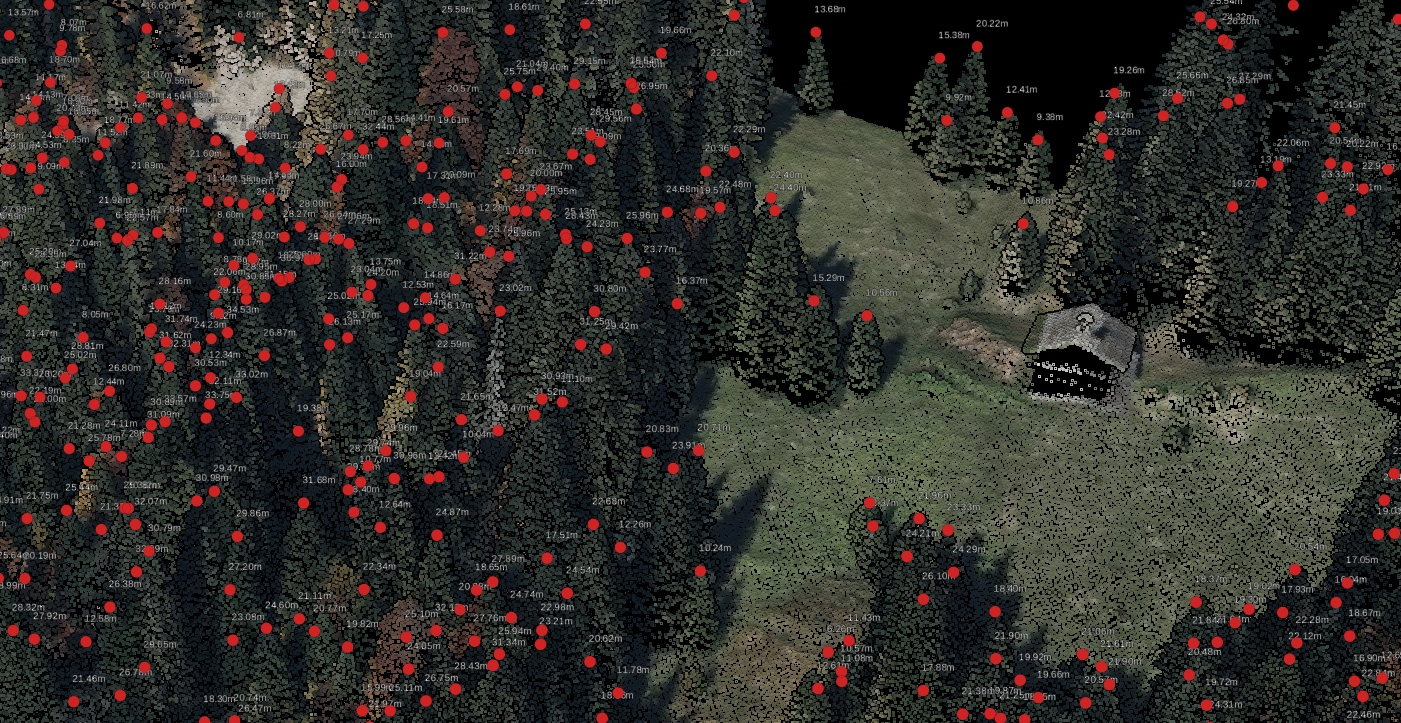
Canopy Height
Build canopy height models that reveal height variation across the stand
Individual Trees
Detect tree tops and crowns to estimate stocking and stand structure
Terrain Context
Generate DTMs that support slope, access, and operability analysis
Scalable Coverage
Analyze larger forest areas more consistently than plot-only approaches
Core Forest Inventory Outputs
Forest inventory projects often combine several LiDAR-derived outputs rather than relying on a single product. These are the ones that usually matter most
DTM
Bare-earth terrain for slope, access, drainage, and ground reference.
CHM
Canopy height model built from surface and terrain elevation differences.
Tree Tops
Local maxima or detected apex points used to estimate tree counts and spacing.
Tree Crowns
Polygon or segmented crown outputs that support stand structure analysis.
Canopy Height Models Support More Than Pretty Maps
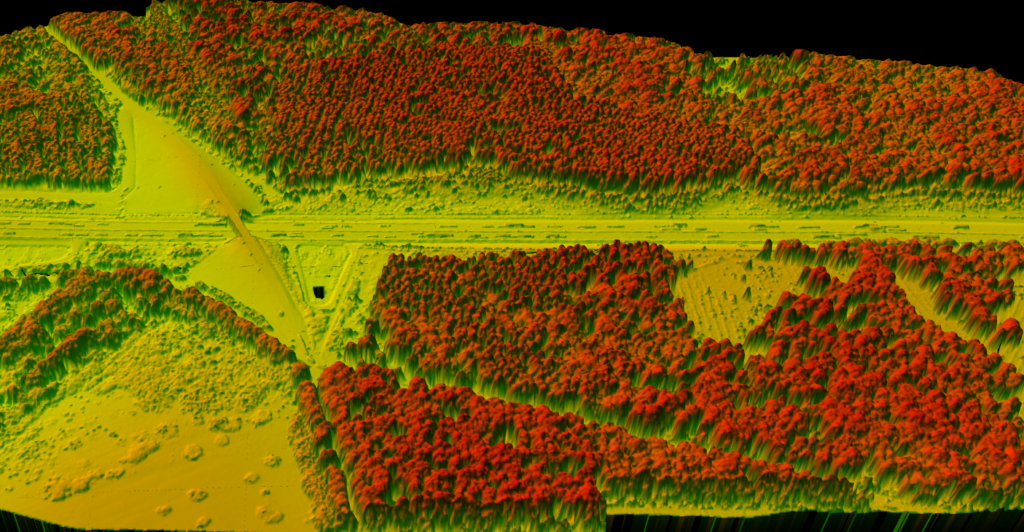
A CHM turns raw 3D points into a practical forestry surface that is easier to interpret and compare
Canopy height models help identify stand variability, dominant tree zones, edges, and unusual structure patterns. In inventory workflows, they often become the bridge between raw point cloud data and tree-level or stand-level measurements that foresters can actually use.
- Highlight height variation across the stand
- Support tree-top detection and crown segmentation
- Provide clearer visuals for forestry interpretation and reporting
TREE DETECTION
Individual Tree Detection Adds Inventory Detail
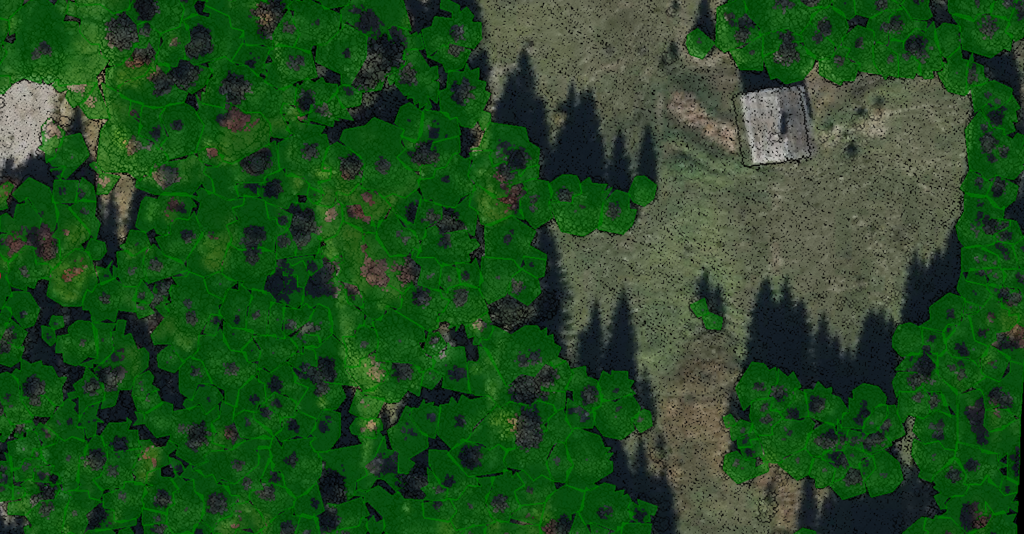
Tree tops and crown polygons help move from stand surfaces to tree-level insight
Tree detection can support stocking estimates, crown competition review, habitat studies, or pre-harvest planning. Results depend on forest type, canopy closure, point density, and segmentation settings, which is why tree-level outputs should be interpreted as part of a broader inventory workflow rather than a single perfect answer.
- Estimate tree locations and spacing across the stand
- Visualize crown extent and canopy separation
- Export vector tree products for GIS analysis
Field Plots vs LiDAR: Better Together
Field-Only Approach
Field plots capture valuable detail, but they only sample part of the forest. Extrapolating from sparse measurements can miss structure changes between plots or across difficult terrain.
LiDAR + Field Data
LiDAR adds full spatial coverage between plots, giving forestry teams better context for height, terrain, stand variability, and tree-level patterns while field measurements continue to anchor interpretation and calibration.
Frequently Asked Questions
How is LiDAR used in forest inventory?
LiDAR is used to map terrain, estimate canopy height, detect tree tops, delineate crowns, and provide spatial structure across forest stands. It complements plot measurements by extending analysis beyond sampled locations.
Can LiDAR estimate individual trees?
Yes, LiDAR can support tree-top detection and crown segmentation, though results depend on forest type, canopy closure, point density, and the specific segmentation workflow used.
What is a canopy height model?
A canopy height model, or CHM, represents vegetation height above ground. It is usually created by subtracting a terrain model from a surface model and is widely used in forestry analysis.
Does LiDAR replace field plots?
No. LiDAR adds wall-to-wall spatial context, but field plots still provide species, diameter, and calibration data that remote sensing alone does not fully replace.
Which Lidarvisor outputs are useful for forestry?
Useful outputs include classified point clouds, DTMs, DSMs, canopy height models, tree-top extraction, crown polygons, and vector products that can be used in GIS workflows.
Related Articles
LiDAR Tree Segmentation
How to Measure Tree Height with LiDAR
Digital Terrain Model (DTM) Guide
To turn an inventory cloud into a map of individual trees, see tree mapping software.
Start Your Forest Inventory Workflow
Upload forest LiDAR data, generate canopy and terrain outputs, and start with 50 hectares plus 5 GB included on free signup.
Create free account50 hectares free. No credit card. No software to install.