

From Anonymous Points to Actionable Intelligence
How Classification Works
Traditional classification uses rule-based algorithms that analyze geometric relationships between points. Ground classification looks for relatively flat surfaces at the lowest local elevations. Vegetation appears as irregular clusters above the ground surface. Buildings show planar surfaces with sharp edges.
The challenge is that rules tuned for one environment often fail in another. Parameters optimized for flat farmland produce terrible results in mountainous terrain. Urban settings with complex architecture confuse algorithms trained on natural landscapes.
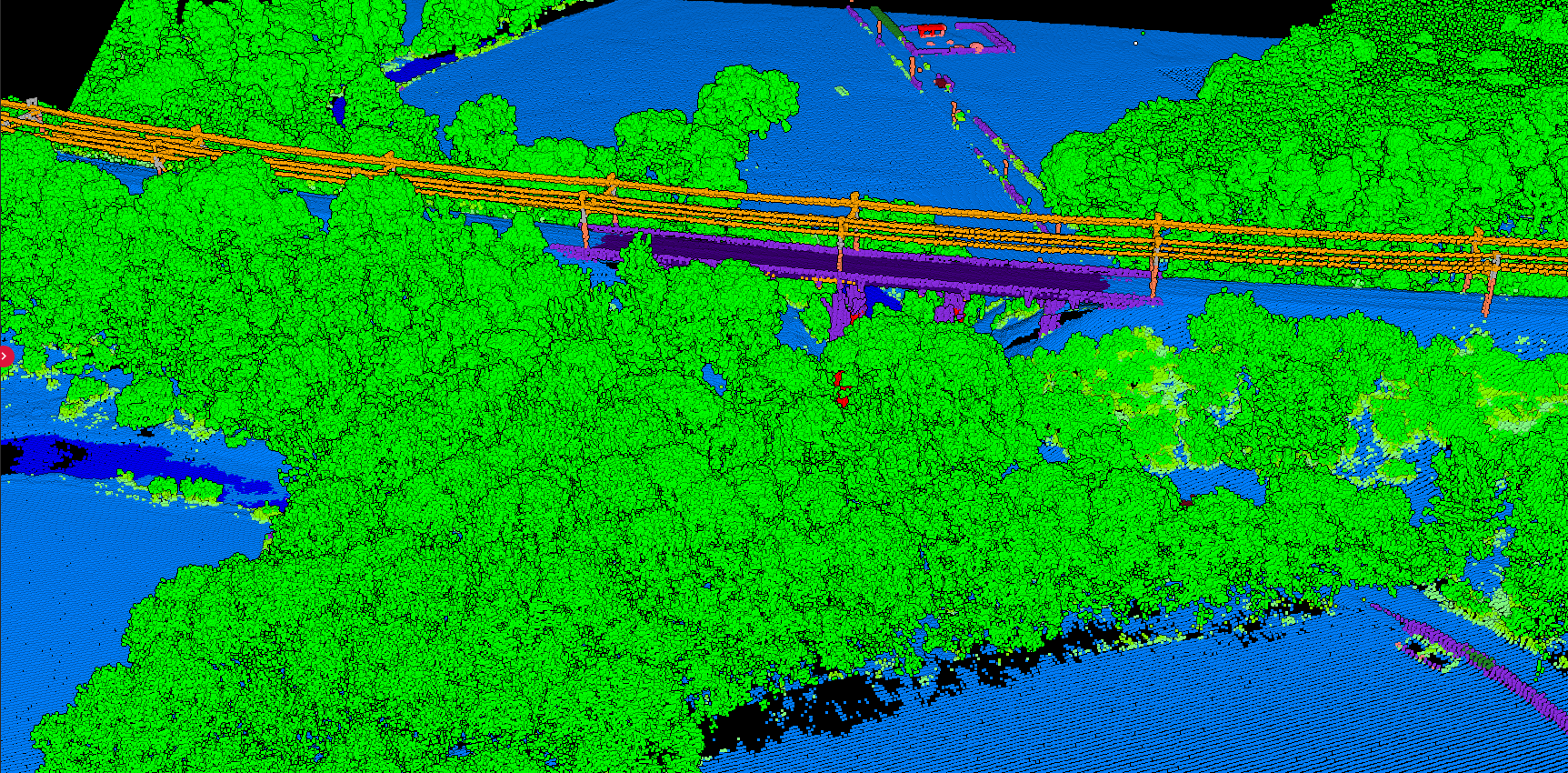
A classified point cloud showing ground, vegetation, and building categories in different colors.
AI-Powered Classification
This is where machine learning changes the game. AI-powered classification learns patterns from labeled training data rather than following rigid rules.
Traditional Rule-Based
- Rigid geometric rules
- Manual parameter tuning per project
- Fails in diverse terrain types
- Hours of manual adjustment
AI-Powered (LidarVisor)
- Neural networks process 3D neighborhoods
- Learns from diverse global datasets
- Adapts to any environment automatically
- Results in minutes, not hours
Urban Classification Results
Classification in urban environments requires accurate separation of buildings, roads, vegetation, and infrastructure. AI-powered algorithms distinguish between complex architectural features that would confuse traditional rule-based methods.
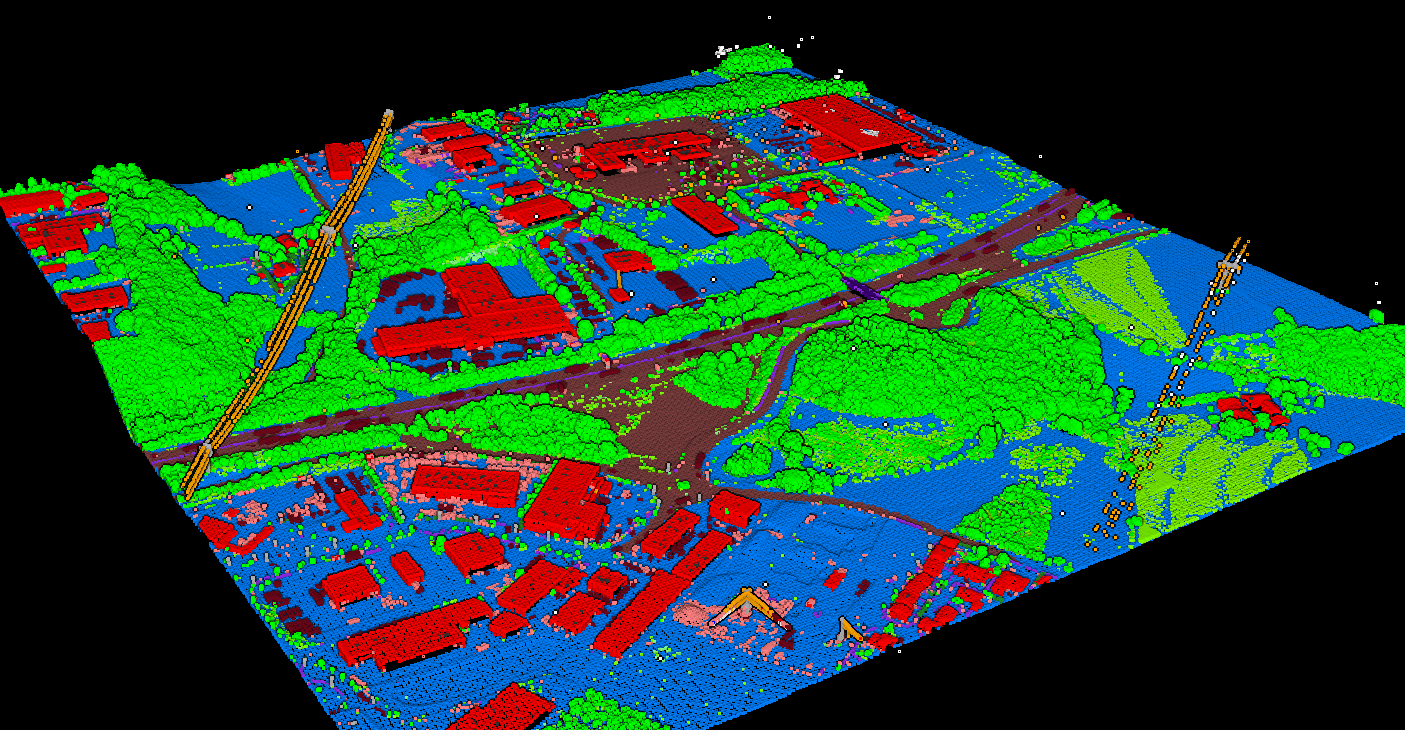
Classification results for an urban area showing buildings and surrounding features.
Why Classification Matters
Every downstream product depends on classification quality. Poor classification cascades into poor deliverables, while accurate classification enables analysis that would be impossible with unclassified data.
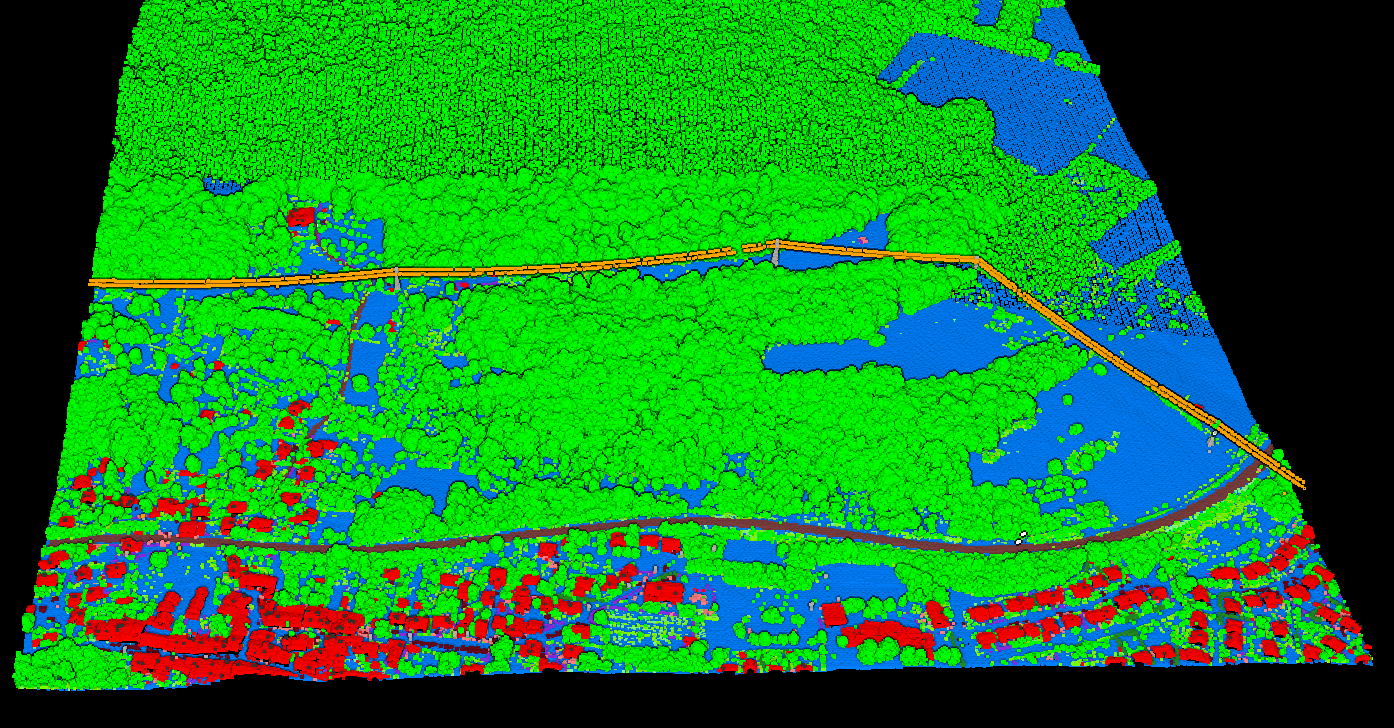
Classification of a power line corridor showing infrastructure and vegetation separation.
Power Line Corridor Analysis
Utility companies rely on accurate classification to identify vegetation encroachments on power lines. Separating wires, towers, and surrounding vegetation enables automated clearance analysis and maintenance planning.
Agricultural Applications
Classification supports precision agriculture by separating crop areas from infrastructure, roads, and natural vegetation. Accurate ground classification enables drainage analysis and terrain modeling for field management.
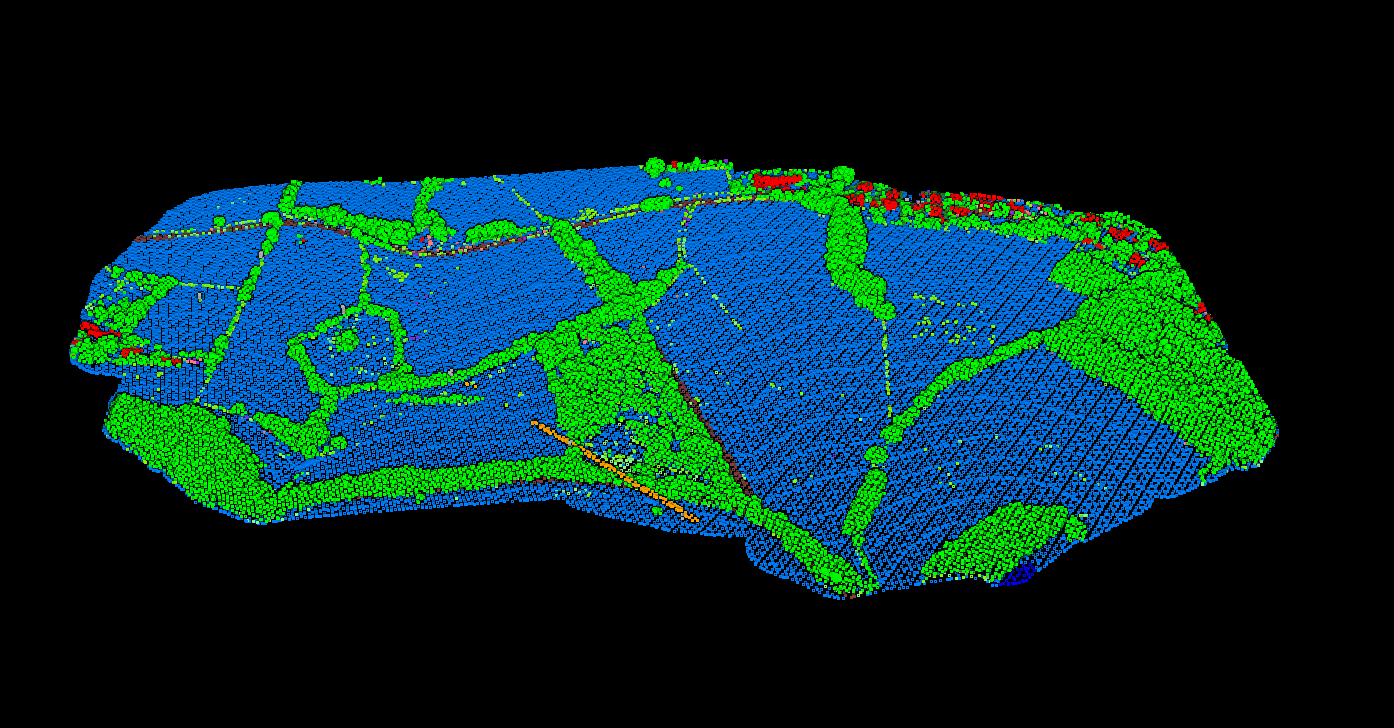
Classification results for an agricultural area showing ground and vegetation categories.
Classification with LidarVisor
LidarVisor uses deep learning models trained on diverse global datasets. Upload your LAS or LAZ file and receive classified results in minutes: ground, vegetation, buildings, and infrastructure labeled automatically and ready for analysis.
For airborne datasets, explore our automatic aerial LiDAR classification capabilities.
Related Articles
Ready to Classify Your Point Cloud?
Upload your LiDAR data and get AI-powered classification in minutes. Start with 10 hectares of free processing.