

No Parameter Tuning Required
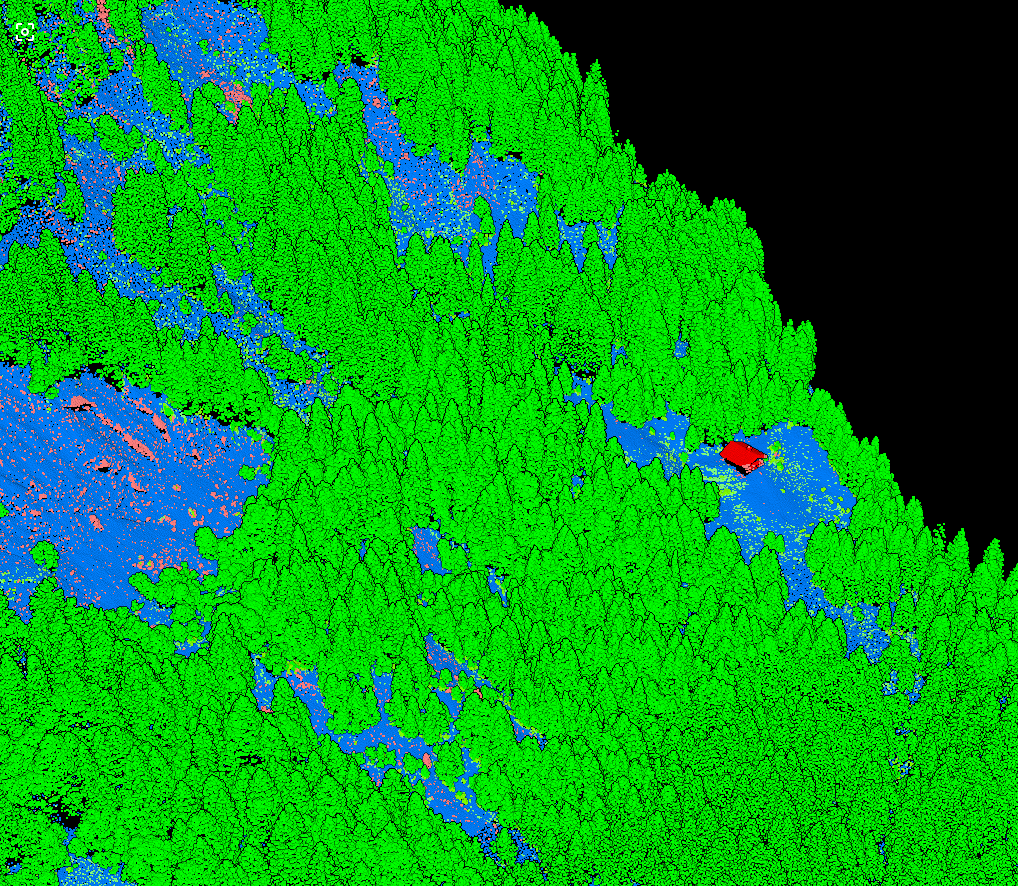
Deep learning models handle steep terrain without parameter adjustment
Why Ground Classification Is So Frustrating
Accurate ground classification determines the quality of every downstream product. If ground points include vegetation or building edges, your DTM will have errors. If true ground points are filtered as noise, you lose critical terrain detail.
Traditional ground classification algorithms require constant parameter tuning, and what works for one terrain type fails completely for another.
Traditional Classification Methods
Each approach requires parameter tuning: maximum slope angles, window sizes, height thresholds, iteration counts. Parameters optimized for flat coastal terrain fail in mountains. Urban settings need different values than forests.
AI-POWERED SOLUTION
How AI Ground Classification Eliminates the Guesswork
Deep learning models learn what ground looks like from examples
Instead of following explicit rules, neural networks learn to recognize ground points from examples. Train on millions of labeled points across diverse environments, and the model learns what ground looks like in different contexts.
✦ KPConv and PointNet++ process 3D point coordinates directly
✦ Each point analyzed within its local neighborhood
✦ Considers elevation, geometry, density, and context simultaneously
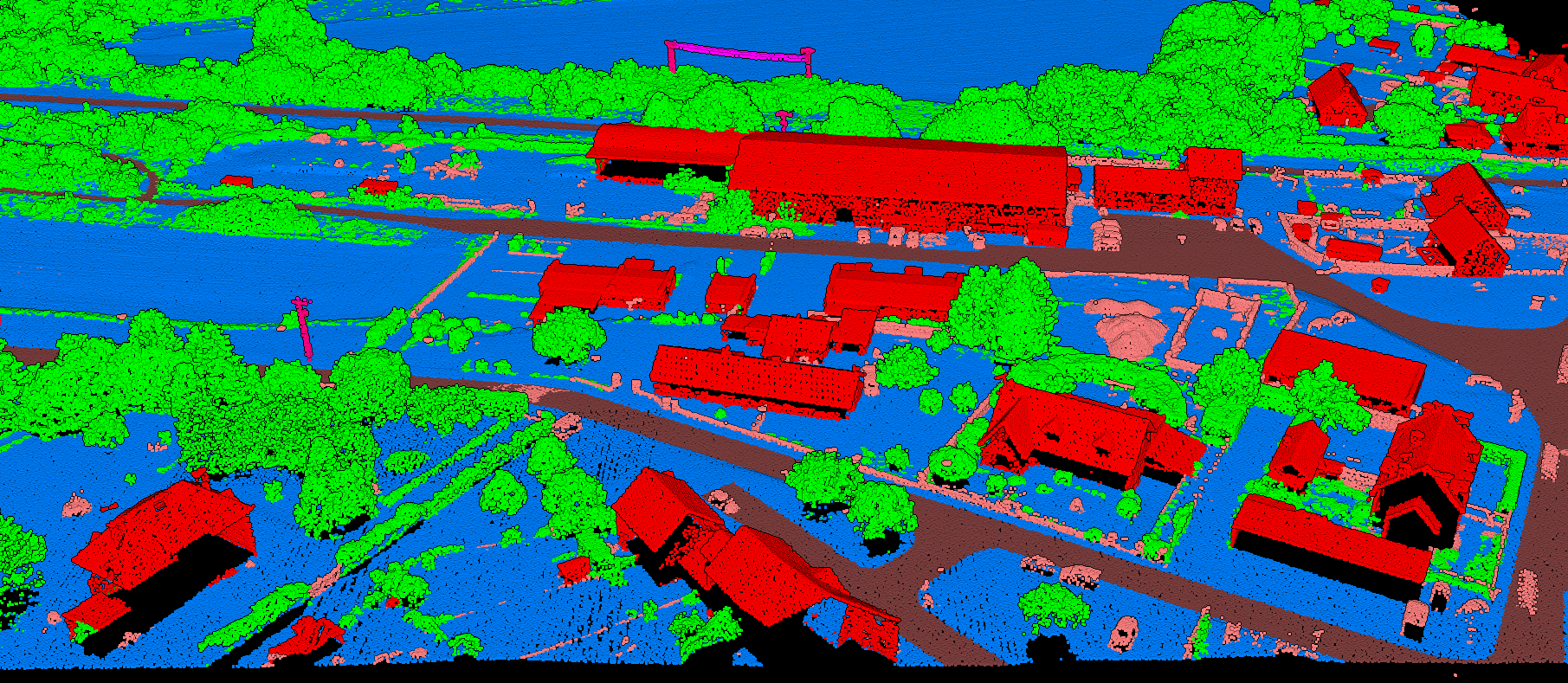
AI classification separates ground from vegetation with consistent accuracy
Training on Global Datasets
The key to robust AI ground classification is diverse training data. When the model has seen enough examples of each scenario, it learns to recognize ground regardless of the specific environment.
🌾
Agricultural Areas
Flat terrain with uniform point density
🏔️
Mountainous Terrain
Steep slopes with exposed rock
🌲
Dense Forests
Heavy canopy cover challenges
🏗️
Urban Environments
Buildings and infrastructure
🌊
Coastal Areas
Water/land transitions
🗺️
Mixed Environments
Multiple terrain types combined
AI vs Traditional Ground Filtering
Traditional Methods
❌ Parameter tuning required for each terrain type
❌ Often misclassifies steep slopes
❌ Requires iterative processing
❌ Results vary with operator settings
❌ Desktop software installation needed
Lidarvisor AI Classification
✅ No parameter tuning required
✅ Handles steep terrain consistently
✅ Minutes per file processing
✅ Same result every time
✅ Cloud-based, nothing to install
COMPLETE WORKFLOW
From Ground Points to DTM in Minutes
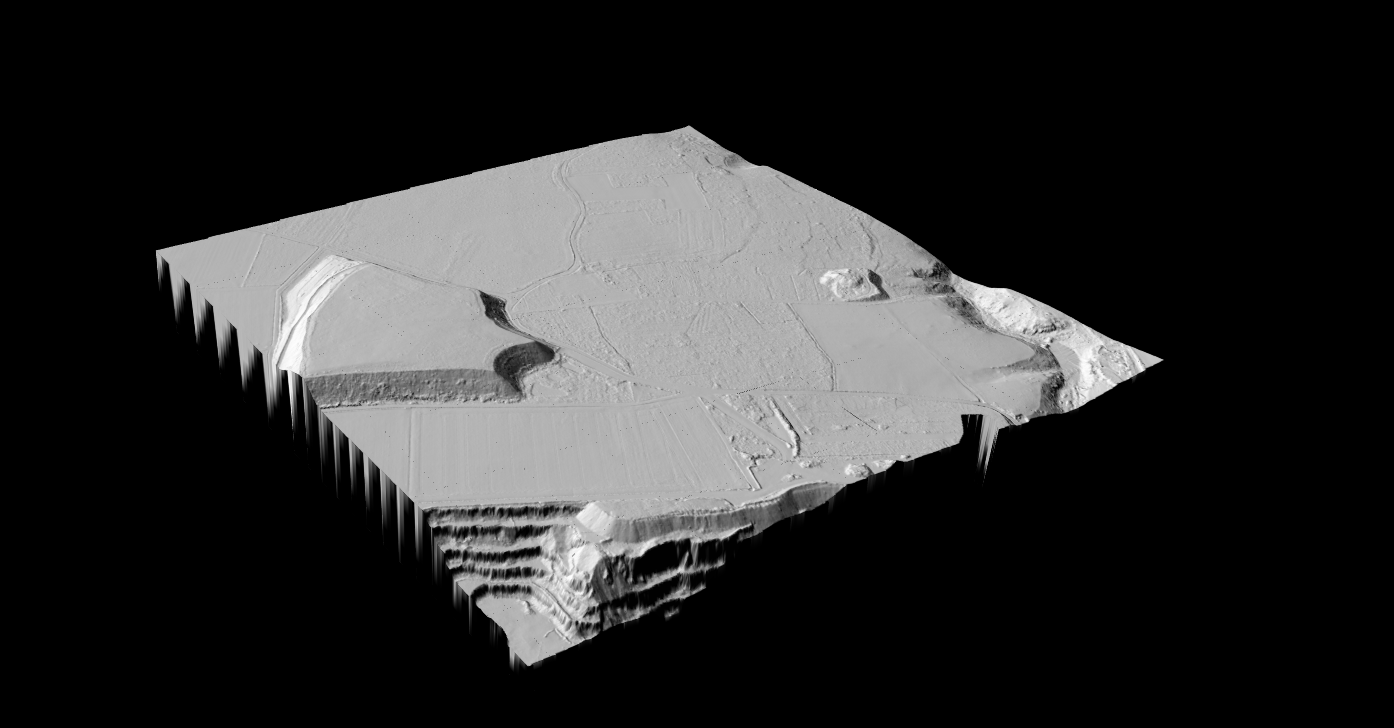
Ground classification quality determines DTM accuracy
Once ground points are classified, generating a Digital Terrain Model becomes straightforward. Interpolation algorithms create a continuous surface from the classified ground points.
✦ No manual corrections needed for typical projects
✦ Consistent quality across project areas
✦ Reliable results on challenging terrain
✦ No parameter iteration, no software to install