

Detect Vegetation Threats to Power Lines Before They Cause Outages
The Challenge of Modern Vegetation Management
Vegetation-related outages cost utilities billions annually. Trees growing into clearance zones, branches ready to fall onto lines, vines climbing poles — these threats are everywhere across your transmission and distribution network. LiDAR corridor surveys capture precise 3D data, but processing hundreds of miles requires specialized software and weeks of manual work.
Traditional Approach
Visual inspections from trucks or helicopters. Inspectors estimate clearances, mark approximate locations, and hope nothing was missed. By the time a hazard tree falls, it’s already too late. LiDAR data sits on hard drives, too expensive and time-consuming to process.
Lidarvisor AI
Upload corridor LiDAR, receive classified data with vegetation threats identified, clearances measured, and GPS coordinates ready for crews. AI handles wire detection, encroachment analysis, and fall-in risk assessment automatically. Minutes instead of weeks.
INFRASTRUCTURE DETECTION
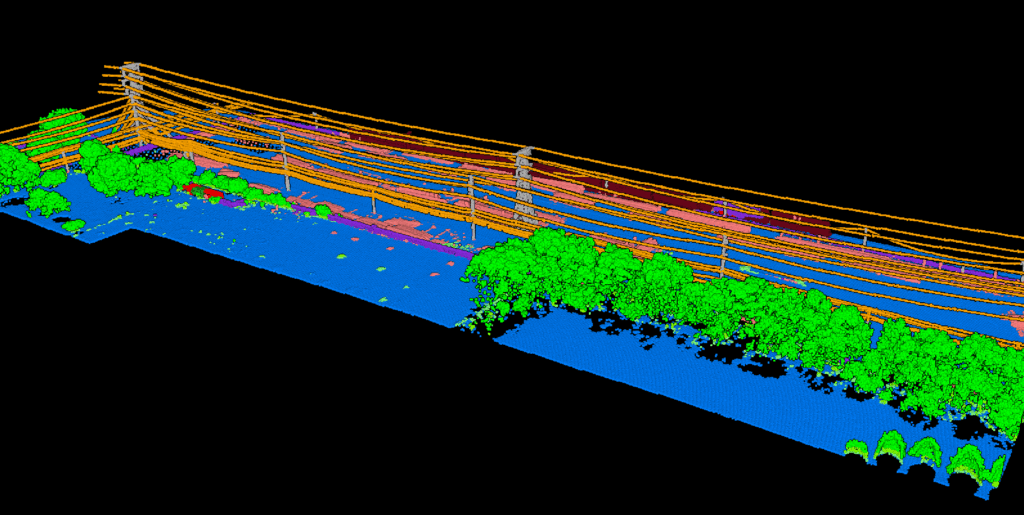
Wire, Pole & Tower Classification
Automatic extraction of power line infrastructure
Lidarvisor identifies and classifies wires, poles, towers, and other transmission structures, separating them from surrounding vegetation and terrain. No manual classification required — AI handles the complexity automatically.
✦ Automatic conductor detection
✦ Tower and pole identification
✦ Works with any LiDAR sensor
THREAT DETECTION
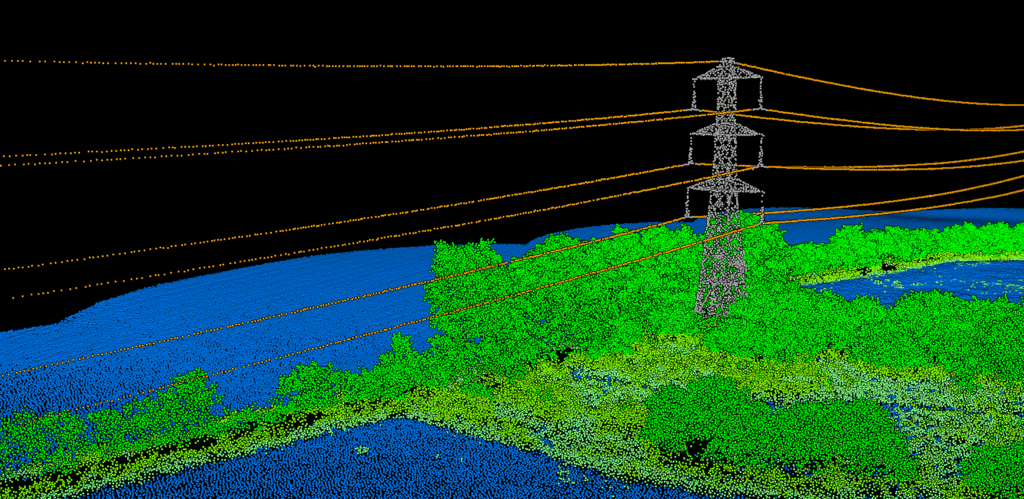
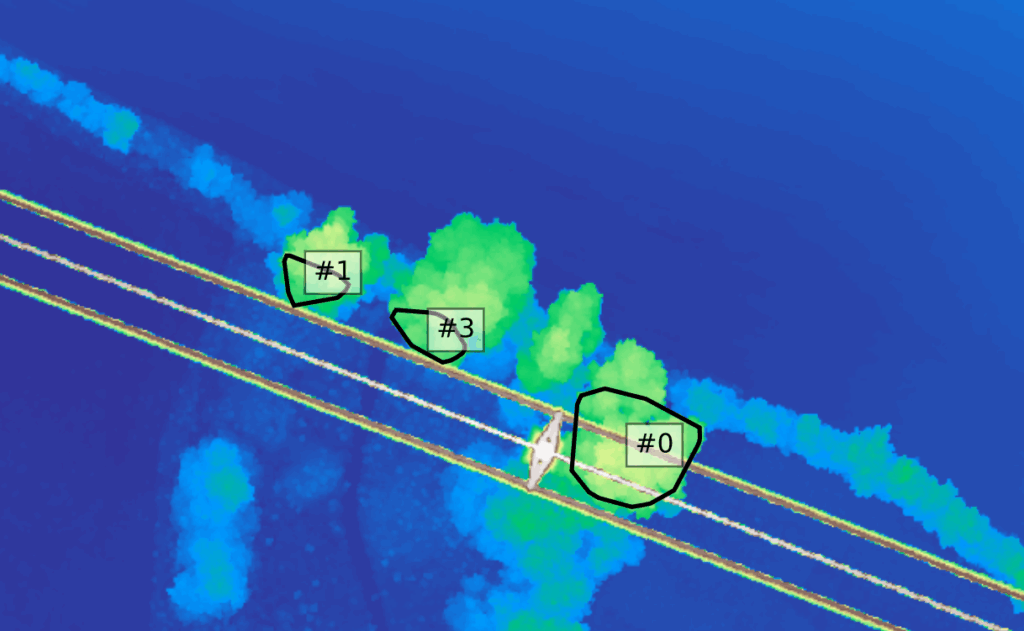
Vegetation Encroachment Detection
Find vegetation violating clearance zones
Lidarvisor analyzes the relationship between vegetation points and power line infrastructure, flagging areas where growth is approaching or already violating your clearance requirements. Catch problems before they become outages.
✦ Custom clearance buffer zones
✦ Encroachment severity ratings
✦ GPS coordinates for every threat
RISK ASSESSMENT
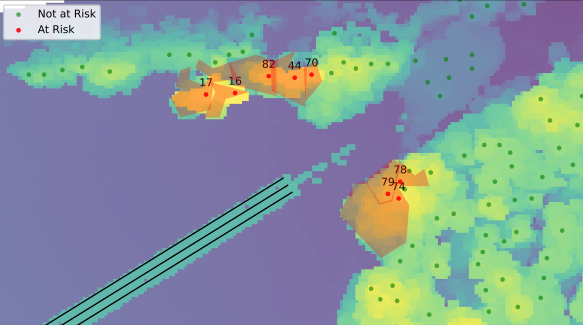
Fall-In Risk Detection
Find danger trees before the next storm
Not all threats are encroachment. A 60-foot tree standing 50 feet from your line is a fall-in risk waiting for the next storm. Lidarvisor identifies trees tall enough to strike your infrastructure if they fall, even when currently outside clearance zones.
✦ Tree height vs distance analysis
✦ Storm damage risk identification
✦ Prioritized hazard tree lists
FIELD READY
Risk Reports with GPS Coordinates
Navigate crews directly to every hazard
Every identified threat comes with GPS coordinates your crews can navigate directly. Export risk reports with precise locations, threat types, and severity ratings. No more vague descriptions or hand-drawn maps. Field crews drive straight to each hazard.
✦ CSV and PDF export formats
✦ Threat type and severity ratings
✦ Mobile-ready GPS coordinates
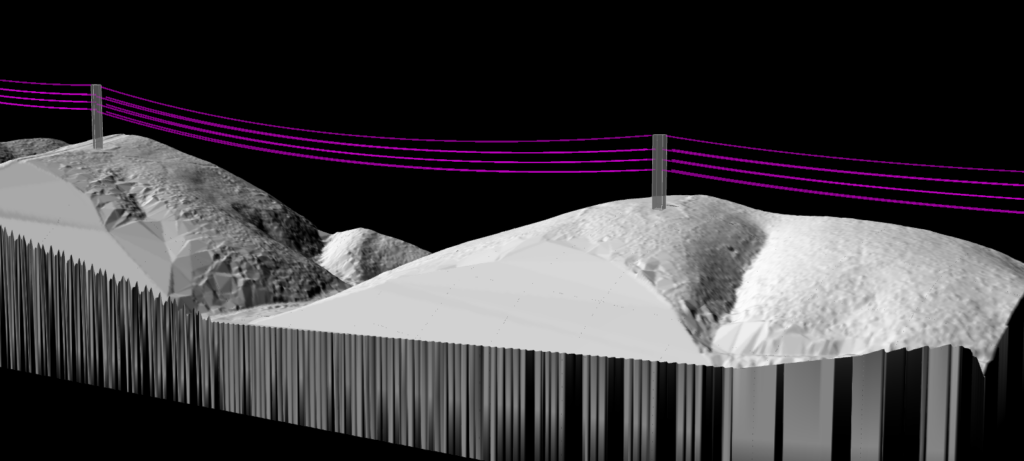
VECTORIZATION
Power Line Vectorization
Export infrastructure as vector files
Export your classified power line infrastructure as vector files. Download conductor centerlines, pole locations, and tower footprints in SHP or DXF format for integration with your GIS and asset management systems.
✦ Conductor centerline vectors
✦ SHP and DXF export
✦ GIS/asset management ready
From LiDAR Scan to Field-Ready Reports
Process corridor data from any platform — drone, helicopter, or fixed-wing
01
Upload
Drag and drop your LAS or LAZ files from drone, helicopter, or fixed-wing surveys.
02
Process
AI classifies ground, vegetation, and power line infrastructure automatically. Minutes, not weeks.
03
Analyze
View encroachment zones and fall-in risks in the browser-based viewer with clearance measurements.
04
Export
Download risk reports with GPS coordinates. Send crews directly to high-priority threats.
UVM Applications
⚡
Transmission Corridors
Analyze hundreds of miles of high-voltage transmission lines, identifying encroachment threats along the entire route.
🏘️
Distribution Networks
Process LiDAR surveys of distribution lines in urban and rural areas, prioritizing work orders by risk severity.
🌪️
Post-Storm Assessment
Rapidly process new LiDAR captures after major storms to identify vegetation damage and infrastructure impacts.
📋
Regulatory Compliance
Generate clearance measurements and reports for NERC FAC-003 and state vegetation management standards.
Frequently Asked Questions
Lidarvisor processes corridor LiDAR data in LAS or LAZ format from any platform — drone, helicopter, or fixed-wing aircraft. The AI handles point clouds from any LiDAR sensor and automatically classifies ground, vegetation, and power line infrastructure without manual parameter tuning.
After classifying your point cloud, Lidarvisor analyzes the spatial relationship between vegetation points and detected power line infrastructure. You can define your required clearance buffers, and the system flags all vegetation within those zones. Each encroachment is assigned a severity rating based on proximity to conductors.
Encroachment means vegetation is growing into the clearance zone around your conductors — it’s already too close. Fall-in risk identifies trees that are currently outside the clearance zone but tall enough to strike infrastructure if they fall. Both are critical for comprehensive vegetation management programs.
Export classified point clouds in LAS format, risk reports in CSV or PDF with GPS coordinates, and power line vectors in SHP or DXF. Reports include threat location, type (encroachment or fall-in), severity rating, and clearance distance. GPS coordinates are field-ready for crew navigation.
Processing time depends on corridor length and point density. Typical corridor sections (5-10 km) process in 10-20 minutes. Large transmission line projects may take longer, but you’ll receive email notification when processing completes. Results are significantly faster than manual classification methods.