

Accurate Terrain Data for Flood Risk Assessment
LiDAR DTM for Flood Modeling
Flood modeling requires precise terrain data. LiDAR-derived DTMs have become the gold standard for hydrological analysis, capturing the exact elevation gradients that determine water flow.
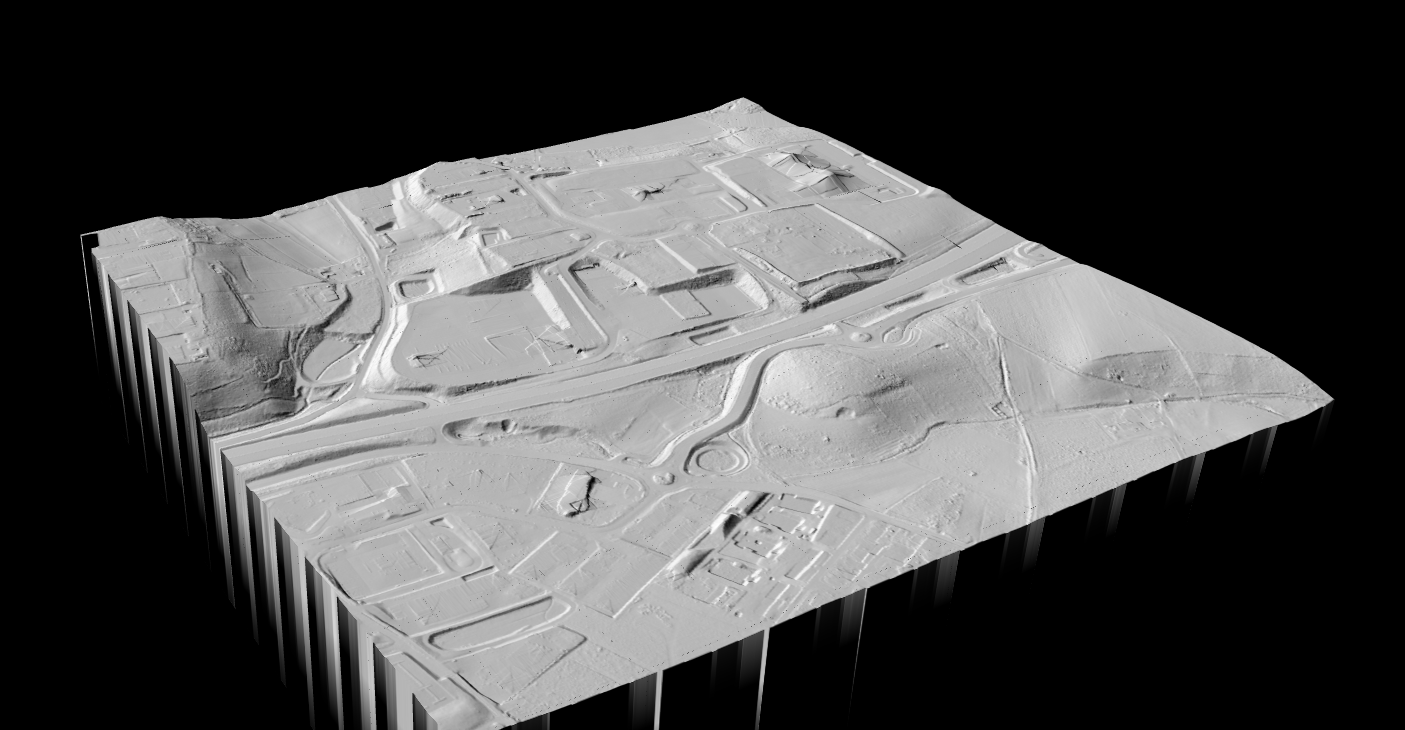
Why Flood Models Need DTMs
A DTM represents the bare earth surface with vegetation and buildings removed. This clean terrain surface is essential for flood modeling because water flows downhill.
Why LiDAR-Derived DTMs Outperform
- Centimeter-level vertical accuracy — critical for modeling shallow flooding where 10-20cm differences matter
- High point density — captures fine terrain features like drainage channels and curbs
- Vegetation penetration — pulses penetrate canopy to capture true ground surface
- Consistent coverage — uniform data across hard-to-access floodplains
Urban Flood Modeling
Urban environments require high resolution DTMs (1m or finer) because:
• Buildings, walls, and fences redirect flow
• Roadways act as preferential flow paths
• Curbs and gutters create micro-drainage patterns
• Storm drains need accurate inlet elevations
Riverine Flood Modeling
Riverine applications can use moderate resolution (2-5m) but require:
• Accurate channel bathymetry
• Floodplain topography
• Levee and embankment elevations
• Bridge and culvert hydraulics
Create a FREE account now and start processing your point cloud
Get 2 GB of storage space and classify up to 10 hectares for free.