

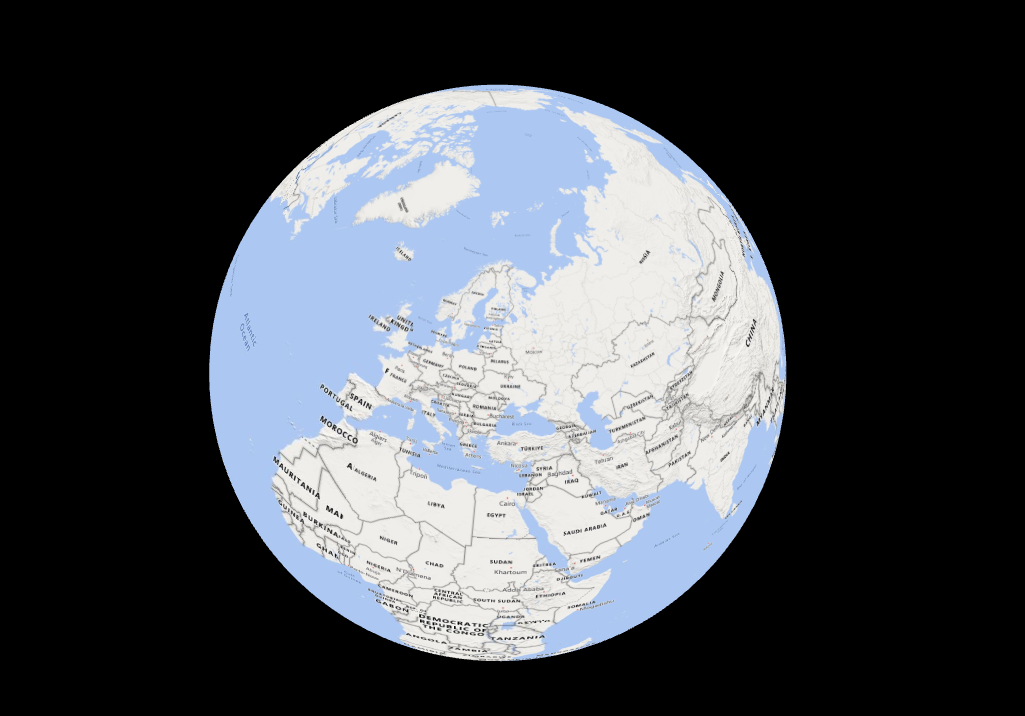
Airborne LiDAR captures high-resolution 3D data from aircraft, emitting millions of laser pulses per second to create dense point clouds with centimeter-level accuracy across thousands of square kilometers.
How Airborne LiDAR Works
The laser scanner fires rapid pulses toward the ground at wavelengths around 1064 nm for topographic mapping or 532 nm for bathymetric surveys. A rotating mirror sweeps the laser across the flight path, creating a scanning swath.
Three core components work together:
- Laser scanner emitting pulses at rates exceeding 2 MHz
- GNSS receiver for precise positioning
- IMU (Inertial Measurement Unit) for tracking orientation
Multiple Returns & Full Waveform
Forest Corridor Mapping
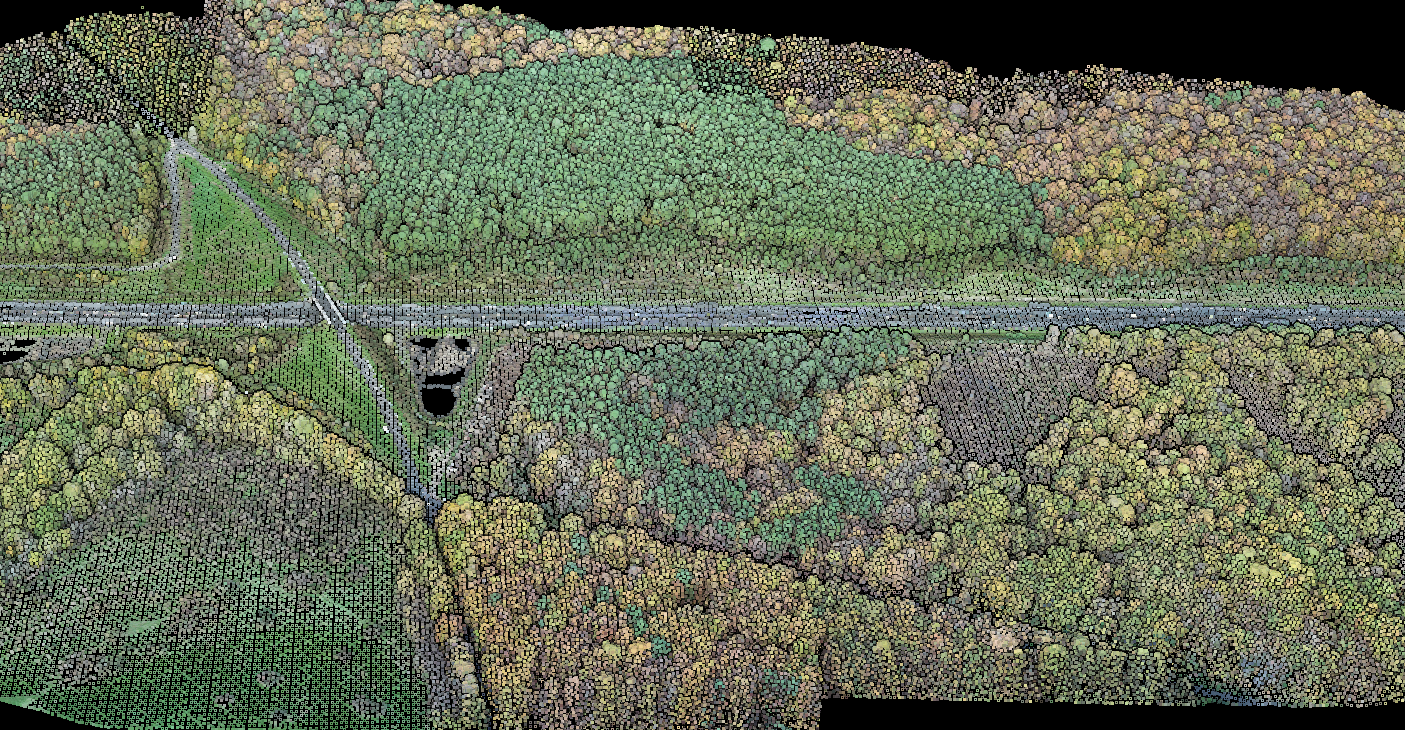
Airborne LiDAR captures both forest canopy and ground surface in a single acquisition. This RGB imagery shows a forest with road corridor — the same area scanned by LiDAR reveals the terrain hidden beneath the tree cover.
This dual-layer capability is essential for transportation planning, logging road design, and environmental assessment.
Key Applications
Forestry & Vegetation
Penetrating canopy to measure ground elevation and vertical structure: tree height, biomass estimation, species classification, and fire risk assessment.
Corridor Mapping
Power line inspection, pipeline monitoring, railway surveys, and highway engineering along linear infrastructure.
Flood Modeling
High-accuracy elevation data for floodplain mapping, drainage analysis, and coastal vulnerability assessment.
Urban Mapping
Building footprint extraction, city modeling, solar potential analysis, and noise modeling in dense environments.
Archaeological Discovery
Revealing hidden structures beneath vegetation for site detection and landscape documentation.
National Programs
Regional and national elevation mapping enabling consistent, standardized datasets.
Power Line & Utility Corridors
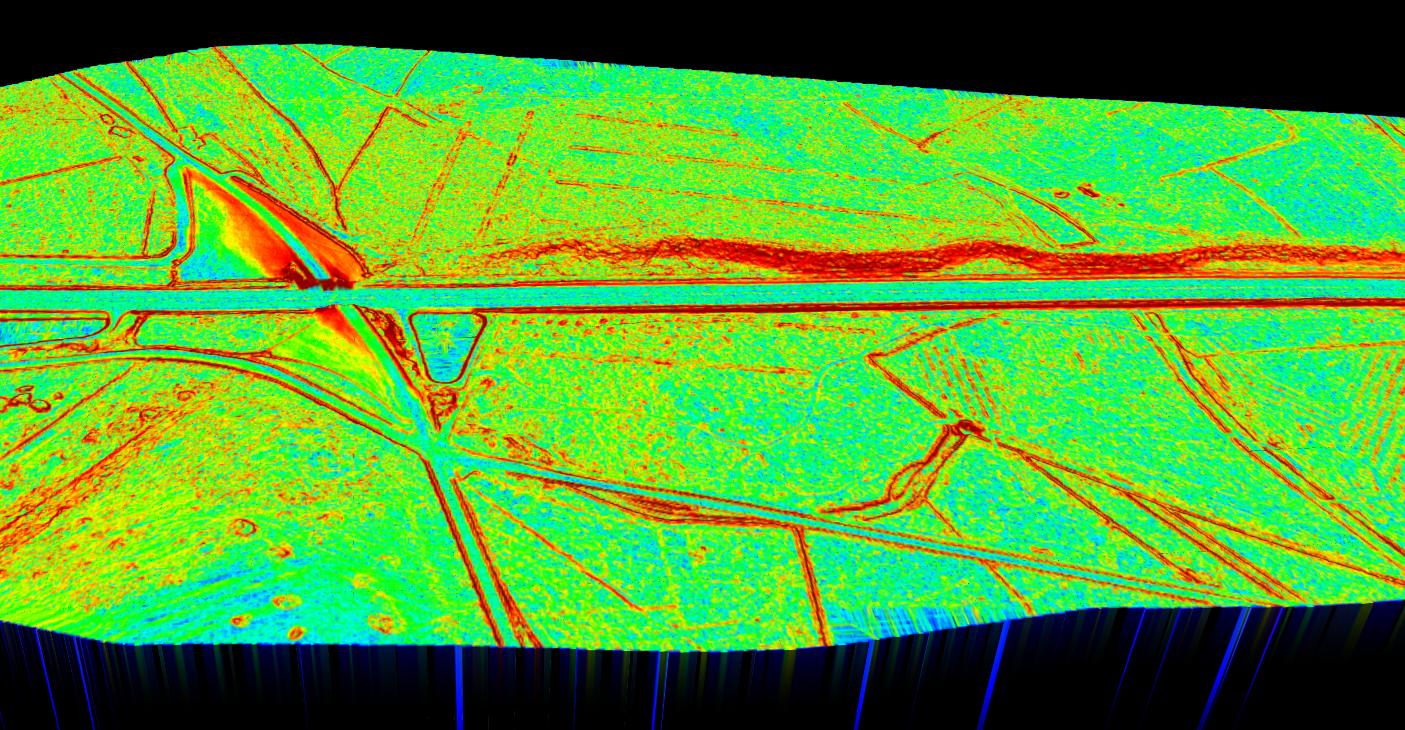
Airborne LiDAR is the industry standard for transmission line surveys. Point density reveals conductor sag, tower geometry, and vegetation encroachment. The elevation-colorized view here shows power lines crossing varied terrain.
Utilities rely on this data for clearance analysis, maintenance planning, and regulatory compliance.
Choosing the Right Platform
Airborne (Manned)
- Project > 500 hectares
- Regional/national coverage
- 5-15 cm accuracy sufficient
- Budget for aircraft mobilization
Drone LiDAR
- Project 5-500 hectares
- High density > 50 pts/m²
- Difficult site access
- Rapid deployment needed
Terrestrial
- Millimeter accuracy
- Indoor/confined spaces
- Complex structures
- Site under 5 acres
DTM Hillshade Output
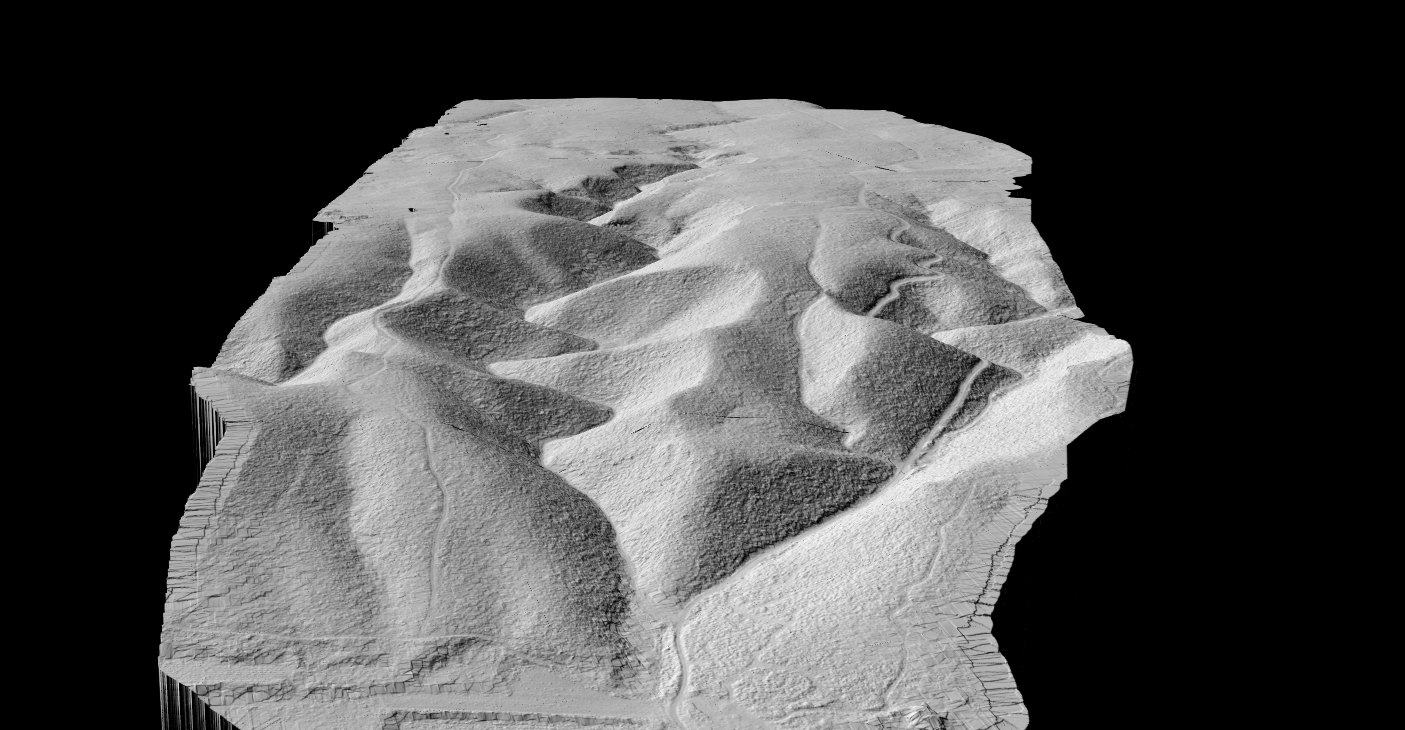
After classification, airborne LiDAR data generates high-quality Digital Terrain Models. This hillshade visualization reveals subtle terrain features — drainage patterns, ridgelines, and slope variations — invisible in aerial photography.
DTM products support engineering design, hydrological analysis, and geomorphological research.
Data Products
Raw point clouds transform into valuable deliverables:
- Point Cloud (LAS/LAZ) — XYZ coordinates, intensity, return number, classification
- Digital Terrain Model (DTM) — Bare-earth elevation for hydrology and design
- Digital Surface Model (DSM) — First-return surface for urban and canopy analysis
- Classified Point Cloud — Points labeled by feature type
- Derived Vectors — Contours, building footprints, tree locations
Frequently Asked Questions
Airborne LiDAR actively emits laser pulses to measure distances, while photogrammetry derives 3D data from overlapping photographs. LiDAR penetrates vegetation to reach the ground, works in low light, and provides direct elevation measurements.
Large-area surveys (>1,000 km²) may cost $100-300 per square kilometer. Smaller corridor projects cost more per unit due to mobilization. Drone LiDAR offers lower costs for projects under 500 hectares.
Modern airborne systems achieve 5-15 cm vertical accuracy (RMSE) and 15-30 cm horizontal accuracy.
Have Airborne LiDAR Data to Process?
LidarVisor automates classification, terrain modeling, and feature extraction for aerial point clouds. Upload your LAS or LAZ files and generate DTM, DSM, contours, and CAD-ready vectors without specialized software.